Comment sauver une abeille en détresse
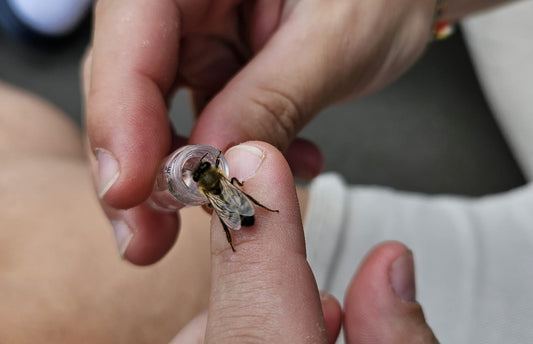


You've probably seen it before: a bee lying on the ground, still crawling but unable to fly away quickly. The bee may be injured, or it may have run out of energy to fly any further. Read on to prepare yourself for the next time you see a bee in distress!
Step 1: evaluate the patient
Take a good look at the bee you found. Is it still moving? If not, you can leave it where it is. Unfortunately, there is nothing more you can do for it. Also check whether its wings and/or other body parts are intact. With broken wings, a bee's chances of survival are very slim. If you see that your bee is still moving without injury, you can help her. You do not need to pick her up or move her unless she is in a dangerous place, but even then, be careful. They can still sting! Moving them often does more harm than good. (If you really have to move her, slide the bee onto a piece of paper or leaf. Use blunt objects to slide the bee onto the leaf.)
Step 2: Offer assistance
If the bee is wet, it is often sufficient to move it to a nice sunny spot. Use the method described above. This is often easier than picking it up and keeping it calm while you move it. Sometimes the bees need a little boost. This can be done by placing a drop of sugar water near the bee. With Beevive, you are always prepared! The key ring contains the perfect mix to turn a weak bee into a flying friend. Keeping the bottle near the bee is often enough; they can drink from it themselves. Be careful not to press the liquid against the bee; they must decide for themselves whether they want to drink. Bringing a bee indoors to ‘revive’ it is not a good idea. The bee will probably become very stressed. If you think you have done everything you can to help it, leave it alone.
Step 3: if none of this helps
Have you tried everything, but there doesn't seem to be much change in the bee's condition? Leave it alone. Sometimes it's okay if a bee doesn't make it. You have done your best, and moving the bee or placing it on flowers will not help it. Nature will now do its work.

Food is the key to reducing bee distress. There is a significant shortage of flowers, especially in early spring. By scattering your Blossombs as soon as spring begins, you will be helping many bees (and butterflies)! The Blossombs mix consists of different types of flowers, some of which bloom early and others at the end of summer. This way, you and the bees can enjoy colorful, nutrient-rich wildflowers for a long time.